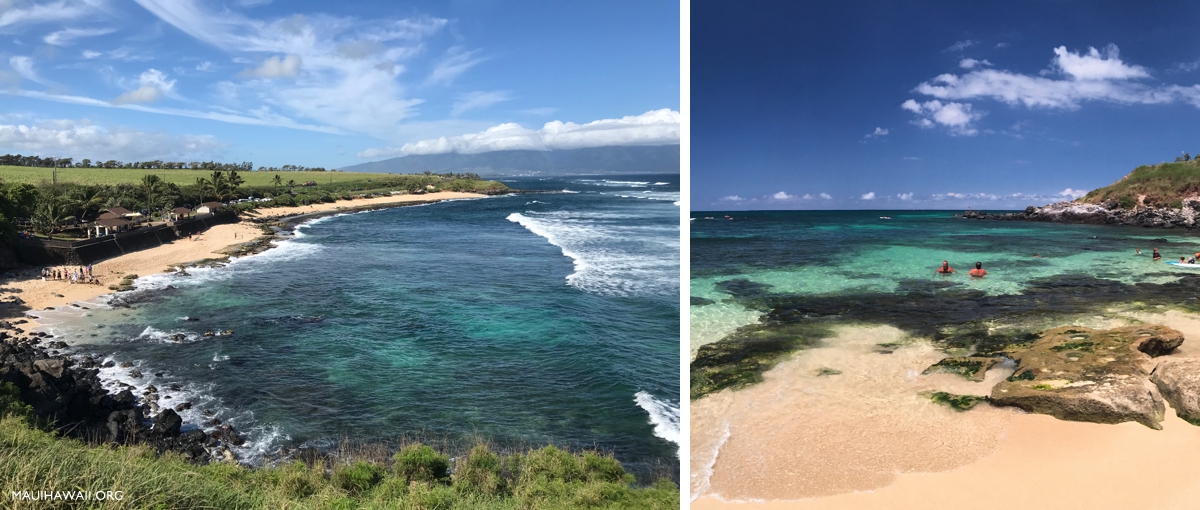
Wisdom usually gets assigned to the obvious people, doctors, professors, spiritual leaders, the ones with titles. But sometimes it shows up where you least expect it, like in the front seat of a Road to Hana van, with someone who has driven these curves so many times they can tell what the ocean is doing before you even see Ho‘okipa.
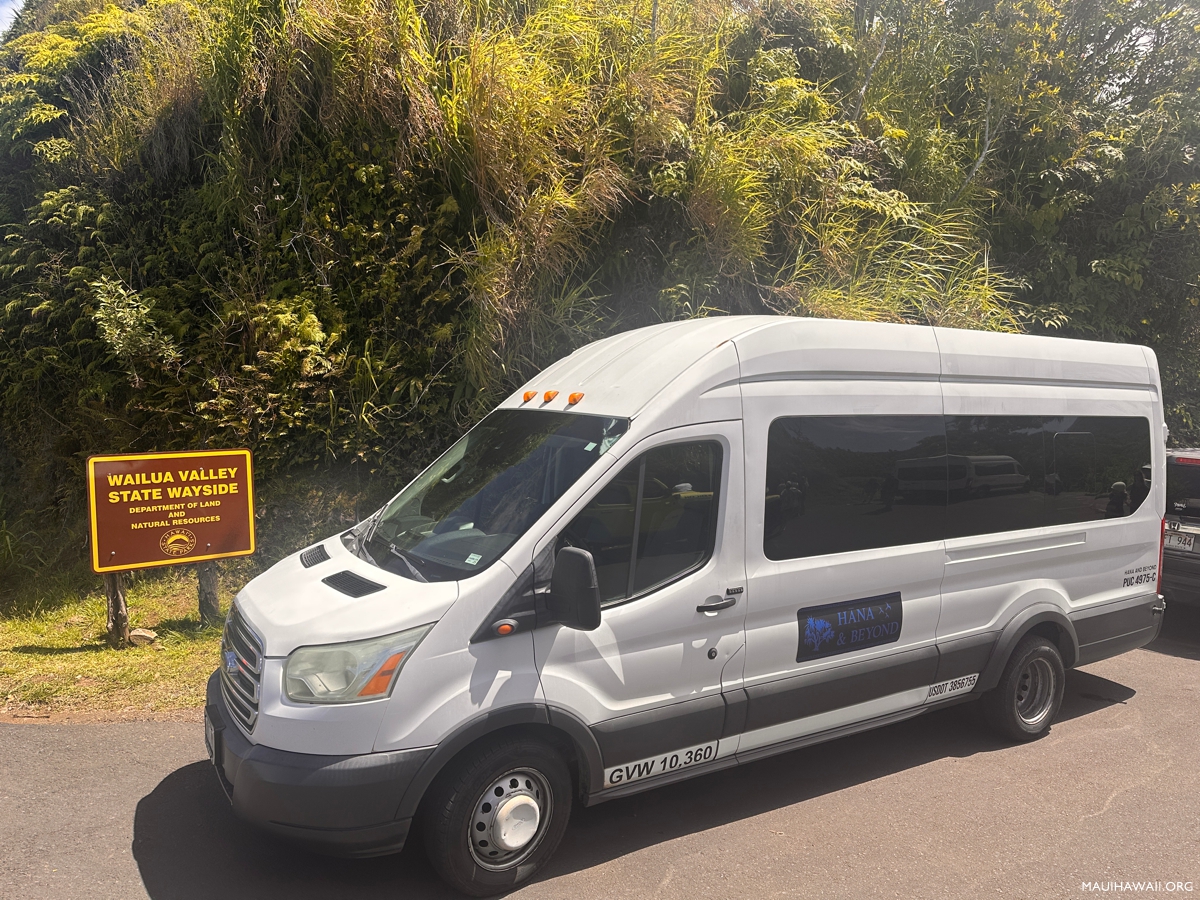
On this day, our guide (he asked that he remain anonymous for this story) is a Hāna local who drives for Hāna and Beyond. He didn’t “teach” anything in a lecture-y way. He just talked story, answered questions, and dropped little truths in between waterfalls and one-lane bridges, if you were paying attention.
Disclosure: Hāna and Beyond provided transportation and our guide for this hosted day.

#1 Always Keep One Eye on the Road
Life is full of shiny distractions, especially on Maui.
You roll past Ho‘okipa and there are waves doing their thing, surfers doing theirs, and someone in the back is already reaching for a phone. Someone asked him how he can drive with so much going on outside the window.
His answer was simple, and it landed.
Always keep one eye on the road.
Not in a stressed-out way, in a steady way. Like, yes, enjoy the view, just don’t forget what’s right in front of you.
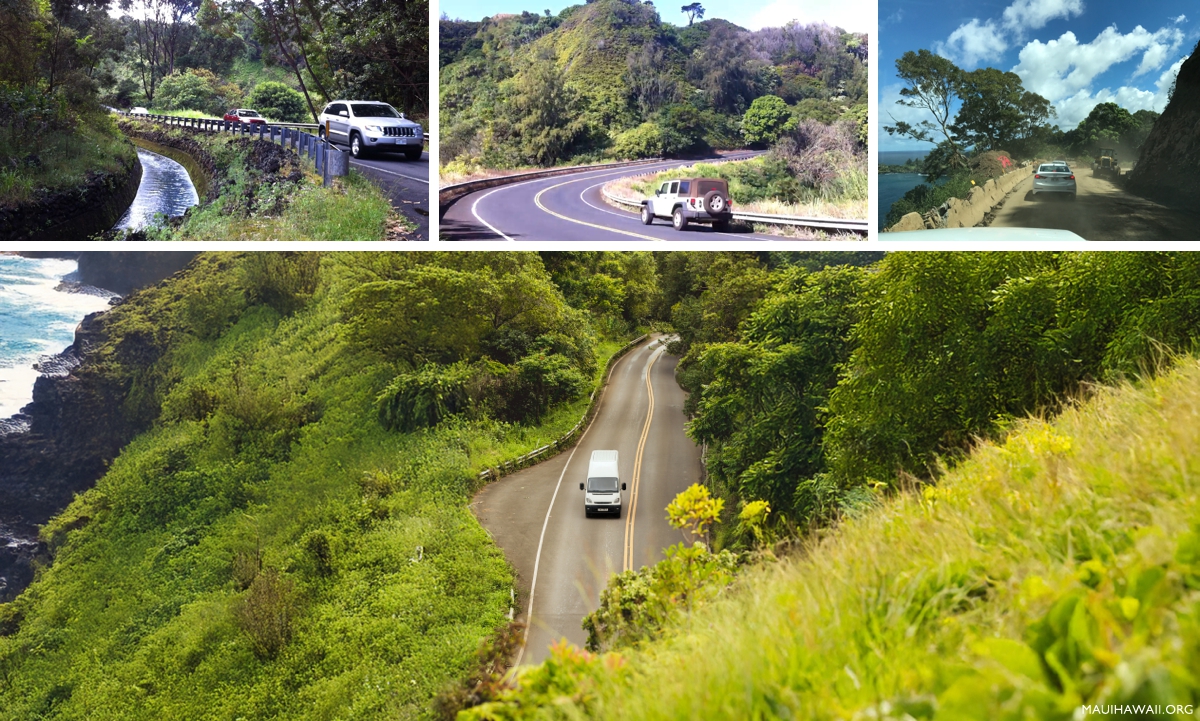
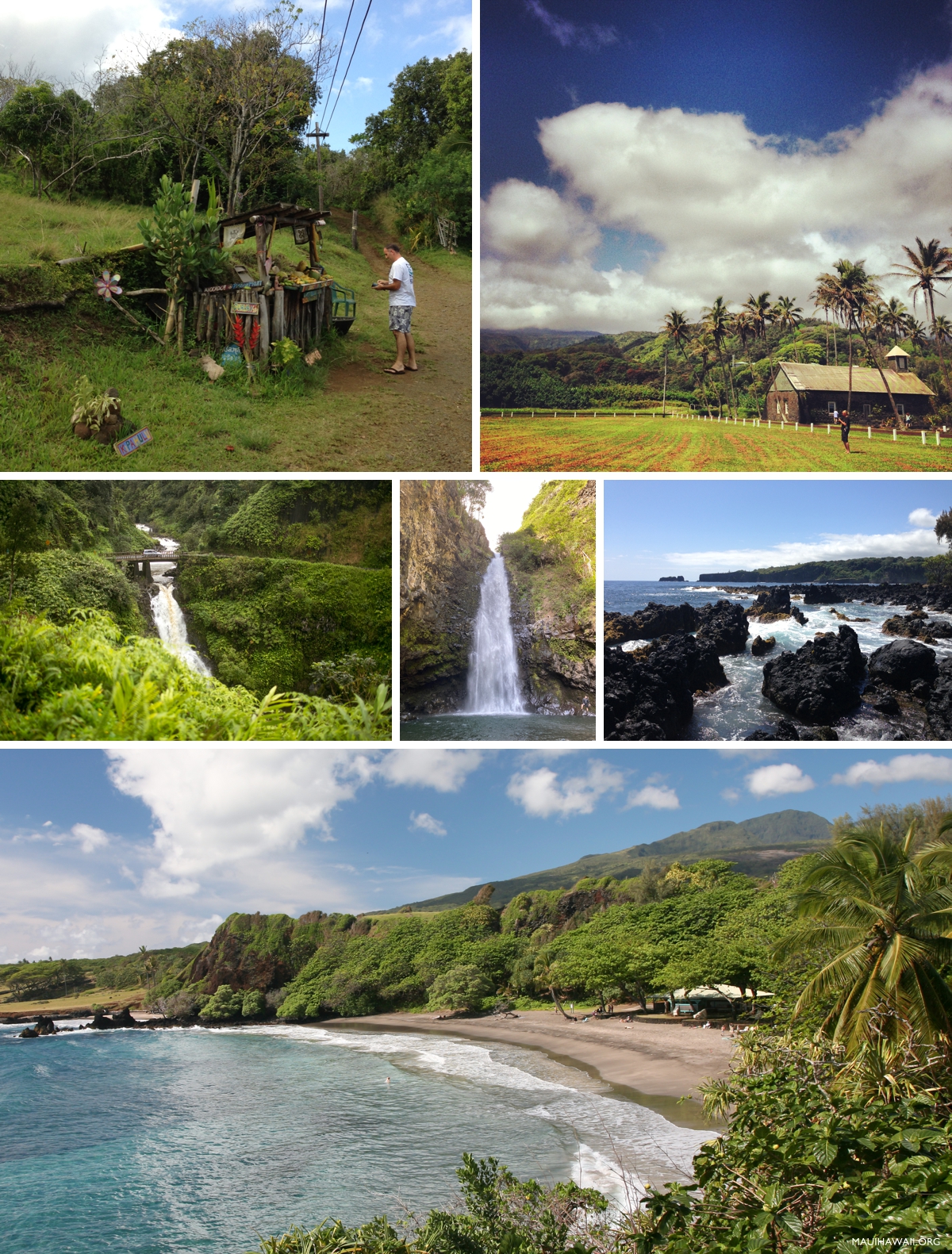
A Road to Hana tour is basically a moving practice in this lesson. You get the lush scenery, the ocean flashes, the roadside fruit stands, the waterfalls, and you also get 600-plus curves that demand respect.
Quick road reality, whether you’re touring or driving yourself:
- Pull over only where it’s legal and safe, those “quick stops” are where things go sideways
- Keep your head up on blind turns, and let faster locals pass
- Stick to marked access, a lot of “hidden gems” online are private property in real life
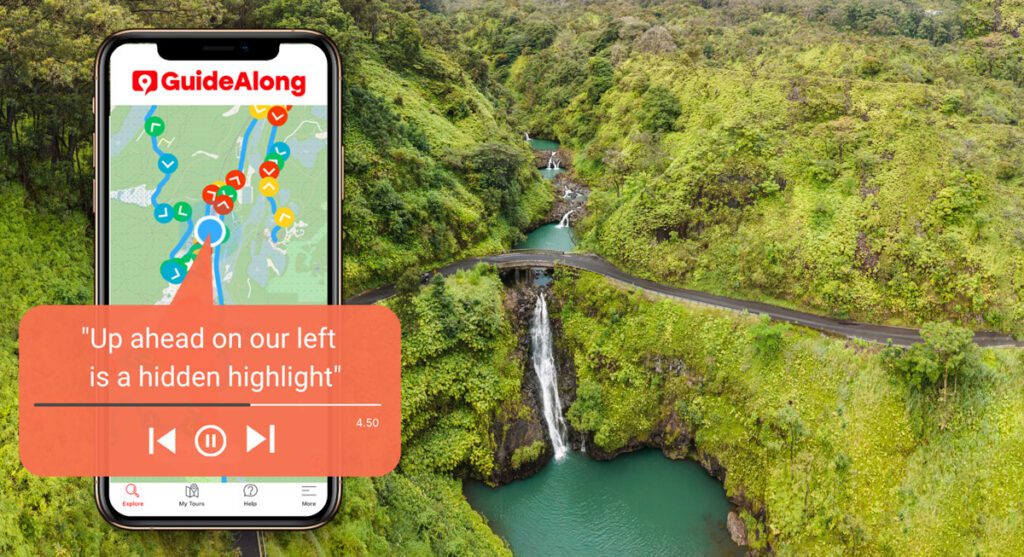
If you’re driving the Road to Hana yourself, downloading the GuideAlong Hana tour is an easy way to make the day smoother, more interesting, and a lot less guessy. Instead of wondering which stops are really worth your time, where to slow down, or whether you should keep going, you get helpful narration right as you need it, plus route options, no expiry, and no need for cell service once it’s downloaded. It’s a smart way to keep the freedom of doing Hana on your own, while still having the kind of local insight that helps you make the most of a very long, very winding day.
#2 Family First
Our guide grew up on a farm in Hāna, in a town where people know your aunties, your cousins, and what you ate for breakfast before you get home.
The point wasn’t nostalgia. It was priorities.
You can chase money, chase status, chase whatever ladder you think you’re supposed to climb, but you don’t get a redo on time with your people. He talked about being there while his kids were growing up, and it made the rest of us think about what we call “success.”
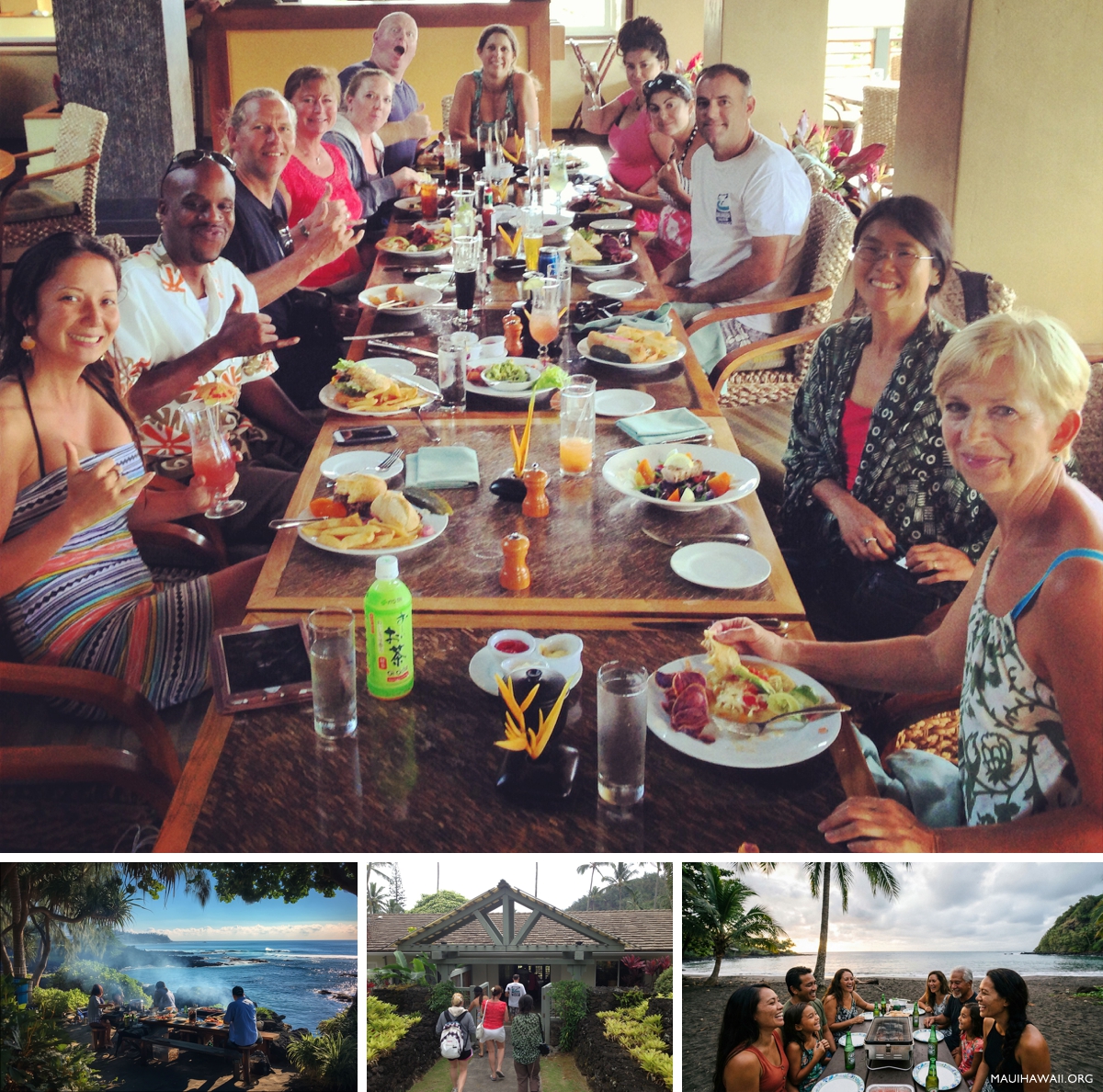
On this trip, we stopped in Hana town and the group had lunch, our guide disappeared for a bit. Not because he was avoiding us, but because he went to visit family. That felt like the most Hāna thing ever.
#3 Can We Share More?
At one stop, everyone wanted the exact same group photo, on their own phone, with their own angle, their own version, their own proof.
Our guide took a bunch of pictures, smiled, then asked something like, let’s try my taking the photos and then I’ll share them with everyone.
We laughed, but it stuck.
It’s not just about photos. It’s about how we move through the world, especially places that aren’t ours. Do we each need our own everything, our own version, our own piece, our own “I was here” moment, or can we lighten the footprint a little while spending less time snapping photos and more time being in nature enjoying this place.
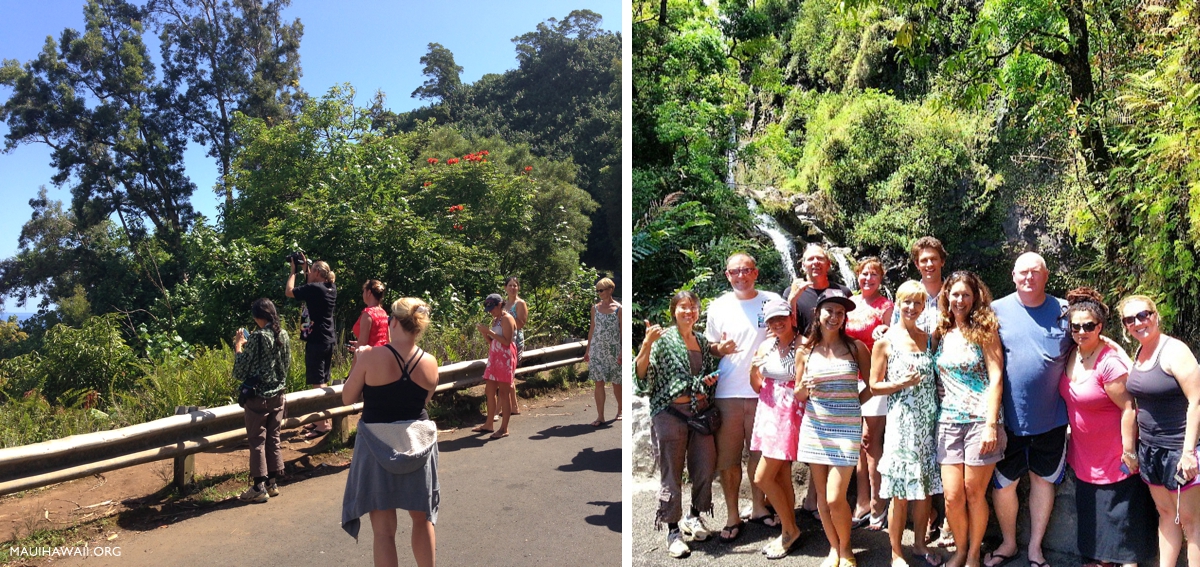
If you want to practice this lesson on the Road to Hana, it’s easy:
- One person grabs the group shot, then AirDrop it, text it, whatever
- Take fewer photos, stay longer in the moment you’re trying to capture
- Share space kindly, especially at tight lookouts and small trail entries
#4 Enjoy the Detours
The Road to Hana does not care about your schedule.
You can plan your perfect list of stops and still end up lingering somewhere unexpected because the light was good, the waterfall was running, the bananas were warm from the sun, or someone needed a breather.
We had planned to make a winery stop upcountry: MauiWine in Ulupalakua, but the day had already filled itself in. We could’ve been irritated about the missed checkbox, but we weren’t. We’d actually had more fun lingering.
Our guide’s line was something like, when you’re on the backside, time won’t matter.
Today, a practical update belongs here: the “backside” route (Pi‘ilani Highway) can be rough in sections and conditions can change fast after storms. Most visitors are better off letting an experienced tour company decide what’s appropriate for the day, instead of treating the map like a promise.
This lesson is basically: let the day be the day.
#5 Make Time to Talk Story
Our guide loved to “talk Story!”
He answered questions about growing up, about Hāna life, about what’s changed and what hasn’t. He joked with us, he listened, he didn’t perform, he just showed up as himself.
He also shared the kind of small-community truth that makes visitors pause:
In Hāna, the news gets home before you do.
That was true before social media, and it’s still true now, just faster.
His bigger point was quieter. You can go out into the world, or the world can come to you. He wasn’t anti-travel, he just didn’t believe travel is the only way to be expanded by life. Sometimes you meet the world one conversation at a time, on your own island, in your own town, on your own road.